
About 78% of local customers act promptly after searching for a service. For junk removal, that short decision period can decide a lead. It frequently decides whether the customer books with you or moves on to a competitor. Strong junk removal marketing turns quick searches into repeatable revenue. Customers want trust, speed, and clear pricing. When those expectations are met, automated booking flows and follow-up emails can turn a single job into a loyal repeat customer.
Find Marketing Solutions For Junk Removal Businesses
Specialists like Junk Removal SEO Company use SEO, PPC, and email automation to improve visibility and conversions. They focus on Google Business Profile optimization, mobile-first booking, and reviews to build trust. That strategy helps a hauler capture high-intent calls and online bookings through targeted advertising.
For owners who want lasting growth, the goal is clear: be visible, trustworthy, and easy to book. This guide will explain how specialized agencies and the right channel mix can drive growth for local waste management businesses.
Key Takeaways
- Email and automation deliver strong ROI by converting one-time jobs into repeat bookings.
- Speed matters because local search intent often turns into bookings within minutes or hours.
- Junk removal digital marketing works best when SEO and paid ads are coordinated.
- Trust assets — including photos, reviews, and clear service descriptions — help increase bookings.
- Specialized providers such as Junk Removal SEO Company bring niche expertise and measurable tactics to the table.
Why Junk Removal Marketing Is Critical For Local Growth
Local residents, property managers, and small businesses are always searching for solutions. They expect quick responses and clear instructions. Effective local junk hauler marketing fills that gap by aligning services with local needs and schedules.
How Local Search Behavior Drives Bookings
When prospects are ready to book, they typically use high-intent search terms that include their city or neighborhood. By targeting these long-tail, location-specific queries, junk removal SEO increases visibility for people seeking immediate service. An easy booking process and mobile click-to-call options help confirm pickups fast.
Why Photos, Reviews, And Clear Descriptions Build Trust
Trust is a key factor behind clicks and conversions. Visuals such as truck photos, team portraits, and before-and-after galleries, along with transparent pricing, reduce hesitation. Positive reviews on Google Business Profile, combined with CRM-driven follow-up emails, encourage repeat business and strengthen garbage collection advertising.
Visibility Vs. Conversion: Showing Up Is Not The Same As Getting Booked
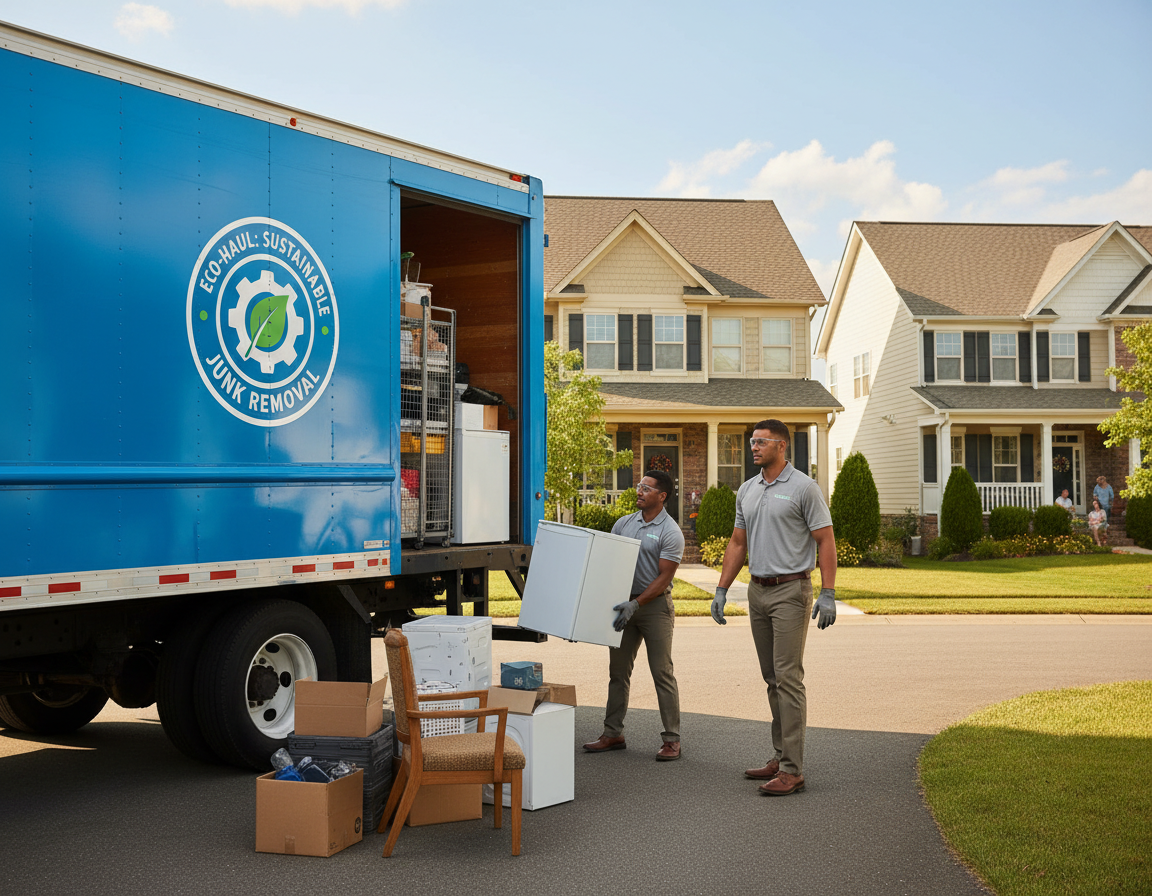
While local listings and ads can increase traffic, conversion depends on clear service pages, simple booking forms, and immediate contact options. Debris removal advertising that balances visibility with conversion performance outperforms campaigns focused only on rankings. The result is more booked jobs instead of just more page views.
| Marketing Channel | Primary Benefit | Tracked Result |
|---|---|---|
| Google Business Profile and local listings | Improves visibility in local map results for high-intent searches | More calls-to-bookings and higher local visibility |
| Pages that include pricing signals | Lowers buyer hesitation and speeds up decisions | Stronger conversion performance with lower booking costs |
| Trust assets: photos & reviews | Creates confidence for first-time buyers | More clicks and stronger booking conversion |
| CRM and email follow-up systems | Captures repeat demand from past jobs and quotes | More lifetime bookings and review acquisition |
| PPC and targeted ads | Puts the business in front of ready-to-book searchers | Quicker lead flow and trackable ROAS |
Specialized agencies with deep industry knowledge bridge the gap between search intent and operational reality. They tailor junk removal SEO, garbage collection advertising, and debris removal advertising to match real availability and pricing. That alignment turns local interest into consistent, measurable growth.
Junk Removal Digital Marketing Services
To grow a haul-away business, owners need a strategic mix of channels. A well-built strategy blends search visibility, paid advertising, social media, and email campaigns. Together, those efforts help convert inquiries into booked work. Specialized vendors add value by reusing proven templates, keyword sets, and outreach tactics built for the industry.
A Full-Service Mix Of SEO, PPC, Social, And Email
The best-performing campaigns combine organic and paid channels. SEO builds long-term, cost-efficient traffic. Google Ads and Local Services Ads can produce immediate leads during peak-demand seasons. Social media adds visibility and provides video proof that builds trust.
Email acts as the thread connecting every touchpoint. It powers welcome emails, reminder sequences, review requests, and win-back campaigns. CRM integration with providers such as Townsquare Interactive supports targeted outreach and helps grow customer lifetime value.
A Local-First Strategy With Google Business Profile And Apple Business Connect
Local listings need to stay updated at all times. Frequent Google Business Profile updates, correct service categories, and high-quality images improve local rankings and click-through rate. Apple Business Connect also reaches iPhone users who frequently rely on Apple Maps for immediate local results.
Citations on Yelp, the Better Business Bureau, and chamber directories are still critical. Partnerships with real estate agents and property managers can open the door to commercial accounts. That can raise average job size and increase repeat bookings.
Why A Specialized Agency Matters: Industry Experience, Case Studies, And Niche Tactics
Waste-removal-focused agencies understand which keywords, service pages, and offers truly produce bookings. They support their recommendations with case studies, client proof, and metrics like calls-to-bookings and average job value.
Choosing a dedicated Junk Removal SEO Company or a full-service junk removal digital marketing firm reduces guesswork. That niche expertise often leads to faster wins with Local Services Ads, Facebook campaigns, and conversion-focused website design.
Technical SEO And Search Foundations For Junk Hauler Marketing
A strong technical foundation is vital for any junk removal business that wants to win online. CRM systems and email platforms feed automated workflows and help track conversions from service pages. Fast-loading pages with clear booking actions make it easier for visitors to call or book online.
Using Long-Tail And Location-Specific Keywords
Local haul-away businesses benefit most from long-tail and city-specific search terms. Searches such as “appliance haul away Boston” and “furniture removal near me” often signal strong booking intent. An agency focused on junk hauler marketing builds landing pages around these searches and tests variations to attract ready-to-book traffic.
Site Structure And Conversion-Focused Service Pages
Best practice is to create one service page per service with a clear headline that combines the offer and location. Each page should feature 3–5 concise bullet points, a short FAQ, before-and-after photos, and a strong click-to-call button. Internal linking to location pages, along with a logical sitemap, helps both search engines and visitors navigate the site.
Schema Markup For LocalBusiness, Service, And Reviews
Adding LocalBusiness, Service, and Review schema can boost the chance of rich results and better click-through rates. Schema helps Google understand price ranges, service areas, and verified reviews. That clarity can support long-term SEO gains by improving visibility in search results.
Improving Page Speed, Mobile UX, And Technical Health
Responsive layouts, compressed images, and fast page speed reduce friction for mobile visitors. Audits using Google PageSpeed Insights and Search Console reveal slow assets and crawl issues. Improvements such as caching, image optimization, and code cleanup boost performance and support more efficient advertising.
Below is a compact comparison of technical priorities and how they directly affect conversions for a local junk removal operation.
| Technical Priority | Main Benefit | Common Fixes | Marketing Impact |
|---|---|---|---|
| Site speed | Fewer bounces and a smoother path to booking | Caching, image compression, and minified CSS/JS | Increased booked jobs with stronger call-through rates |
| Mobile usability | Improved experience for mobile searchers | Responsive layouts with large, touch-friendly CTAs | Stronger mobile conversions for junk hauler marketing |
| Website structure | Clearer navigation and easier indexing | One service per page, location pages, breadcrumb trails | Better rankings for long-tail local queries |
| Structured Data | Enhanced search appearance through rich snippets | LocalBusiness, Service, and Review schema | Improved CTR that strengthens junk removal SEO |
| Recurring site audits | Continuous issue detection and prioritization | PageSpeed, crawl tools, and Search Console | Improved debris removal advertising performance over time |
When technical SEO, on-page content, and CRM tracking work together, the result is a measurable funnel. That setup lets teams compare organic leads, improve user journeys, and scale promotion decisions using data.
Paid Advertising And Retargeting For Immediate Leads
Paid channels capture intent into bookings by finding ready-to-act prospects and following up after the click. Every campaign should connect to a CRM and an email automation sequence. That way, new leads enter reactivation flows and receive review requests after the job. Spend should be judged by booked jobs and customer lifetime value rather than by clicks alone.
Google Search Ads And Local Services Ads
Google Search Ads reach customers who are already searching for junk removal help. Local Services Ads add trust signals through proximity, reviews, and direct booking functionality. Agencies and consultants like Ads by Josh commonly organize bids around job value so each booked job is more profitable.
Facebook And YouTube As Awareness Channels
Social platforms build familiarity before a prospect urgently needs junk removal. Before-and-after reels and short testimonial clips build trust and make booking feel easier. Companies like Top Dog Digital use Facebook and YouTube targeting to create recognition, then push engaged viewers into SMS or email follow-up flows.
Retargeting Tactics For Recovering Lost Visitors
Retargeting on display networks, Facebook, and YouTube helps bring back visitors who did not book the first time. Ads that emphasize local pricing, trust signals, or same-day availability can raise conversion rates. A retargeting system tied to conversion-focused landing pages reduces wasted spend and improves booked-job conversion.
Measure Booked Jobs And ROAS
Performance should be measured using cost per booked job, ROAS, average job value, and lead-to-job rate. Call tracking and dedicated landing pages help attribute completed jobs to the correct channel. Instead of chasing cheap clicks, optimize for revenue per booked job. That approach ensures garbage collection advertising and junk removal digital marketing drive actual profit.
| Marketing Channel | Core Goal | Ideal Use Case | Main Metric |
|---|---|---|---|
| Google Search Ads | Capture high-intent leads | Urgent pickups and clearly priced services | Cost per completed booking |
| LSAs | Local trust and direct booking | Service-area targeting with reviews | Booked-job rate |
| Facebook Ads | Brand awareness plus retargeting | Local promotions and audience building | Return on ad spend plus lead quality |
| Paid YouTube video ads | Build video trust signals | Video proof and customer stories | Conversion from view to booking |
| Display ads and retargeting | Re-engage lost visitors | Offer-driven return visits | Conversion rate of returning visitors |
When campaigns are coordinated well, junk removal advertising and garbage collection advertising become predictable lead engines. Specialists focused on the niche, including Ads by Josh and Top Dog Digital, bring playbooks that connect paid spend to booked jobs and long-term value.
Email Marketing As A Revenue Driver For Waste Management Companies
For local waste management operators, email is one of the most reliable channels for profit. A well-segmented list built from completed jobs, quote requests, and web leads can transform everyday interactions into repeat business. Strong operators view email as a revenue engine rather than as a simple newsletter tool.
Budgets should be set with return expectations in mind. Common industry benchmarks suggest email can return about $36–$40 for each $1 spent when lists are permission-based and content is relevant. That makes junk removal email marketing especially attractive for owners focused on cost per booked job.
List growth works best when consent and clarity come first. Contacts should be segmented into groups such as new leads, recent customers, and commercial clients. That improves message relevance and can raise open rates and booking conversions in junk removal business promotion campaigns.
Automation plays a central role in reducing manual work and increasing conversion rates. Typical automated sequences include welcome emails, reminder flows, satisfaction surveys, and review requests. Those automations are foundational for effective junk removal marketing services.
The best email content is practical and easy to act on. Seasonal prompts, prep tips, company updates, and before-and-after highlights keep the list engaged. A regular schedule, such as monthly or every other week, helps maintain engagement over time.
Tracking performance is what turns email from a routine task into a measurable growth channel. Monitor open rates, click-through rates, and booking conversions so subject lines and CTAs can be refined. When CRM and scheduling tools are connected, review requests and follow-up can run automatically while crews stay focused on service. That improves both the measurability and profitability of waste management marketing.
Content, Video, And Local Authority To Support Garbage Collection Advertising
Strong content and video are important for building trust and driving bookings in local junk removal. Well-built pages and clips help turn searches into calls. Email and on-site galleries work together to provide proof, reduce friction, and encourage repeat business.
On-page content that converts begins with clear service language and useful pricing cues. Short, easy-to-scan sections should explain what customers should expect, how to prepare items, and which materials are prohibited. Including typical job ranges and time windows reduces booking abandonment and improves the effectiveness of garbage collection advertising.
Trust-building video ideas include before-and-after transformations, time-lapse cleanouts, and customer testimonial clips. Long-form how-to videos and case studies can be posted on YouTube to capture search demand. Shorter edits can then be reused on Instagram and Facebook to drive engagement and strengthen junk removal content marketing.
Partnerships and sponsorships in the local community can expand visibility beyond search and ads. Collaborating with real estate agents, contractors, and property managers can create a dependable referral stream. Sponsoring cleanup days and local events can raise awareness while also creating backlink opportunities for junk hauler marketing.
Consistent citations and link building remain important for local SEO performance. Listings on Yelp, the Better Business Bureau, and community directories should always use consistent NAP details. Reaching out to neighborhood blogs, chamber websites, and business partners can earn contextual backlinks that strengthen local authority.
Email and content should work as a cycle rather than as separate tactics. Use gallery highlights and success stories inside newsletters to spark repeat bookings. Educational posts that teach customers how to prepare for a pickup can reduce no-shows and improve completion rates. When combined, these elements support sustained garbage collection advertising and measurable growth over time.
Measurement And Common Errors In Debris Removal Advertising
Accurate tracking drives growth, while guesswork wastes budget. By linking phone calls, form fills, and email leads to actual booked jobs, operators can identify which channels generate real revenue. This clarity allows waste management marketing teams to put more budget into high-value channels and stop overspending on weak tactics.
Key Metrics need to focus on outcomes instead of vanity numbers. Measures like calls-to-bookings, lead-to-job rate, average job value, and cost per booked job reveal true profitability. Those numbers guide landing-page updates, follow-up changes, and smarter ad spend.
Effective measurement requires the right stack of tools working together. Google Analytics tracks on-site activity, while Search Console highlights visibility and search trends. Ahrefs or SEMrush offer competitor and keyword insight, while call-tracking tools connect phone leads to specific campaigns. When all of that is integrated with a CRM, email opens, clicks, and conversions can be mapped back to actual jobs.
Many common problems are straightforward to fix once they are identified. Incomplete Google Business Profile or Apple listings can hurt local reach. Slow pages that do not work well on mobile often drive prospects away. Weak review follow-up and vague service descriptions also suppress conversion rates. Specific service pages for offers like mattress removal or garage cleanouts, along with pricing cues, often improve junk removal SEO results.
Monthly reviews help keep campaigns honest, sharp, and performance-driven. That review process should include campaign KPIs, automation workflows, and email metrics. A/B tests on landing pages and calls to action help sharpen messaging. Budget decisions should be based on cost per booked job and average job value rather than on cost per click. That is how debris removal advertising improves returns over time.
| Performance Metric | Why This Metric Matters | Recommended Tool |
|---|---|---|
| Calls that become bookings | Shows phone lead quality and booking efficiency | CRM with call tracking |
| Lead-to-booked-job rate | Shows how well follow-up and estimating are working | CRM reporting dashboard |
| Average revenue per job | Helps prioritize higher-margin services | CRM plus accounting software |
| Cost per booked job | Shows actual advertising efficiency | Google Ads + call tracking + CRM |
| Search visibility | Measures keyword rankings and local search presence | Search Console combined with Ahrefs or SEMrush |
| Email conversion metrics | Shows whether email drives repeat bookings and offer responses | Email software connected to CRM |
To avoid wasteful spending, focus on junk removal advertising metrics that tie directly to booked jobs. Review listings, site speed, reviews, and service pages on a regular basis. That makes waste management marketing more measurable, repeatable, and profitable.
Final Thoughts
Junk removal businesses that combine local SEO basics with targeted paid channels and strong email automation will usually grow faster. The foundation starts with Google Business Profile, Apple Business Connect, mobile optimization, and clear service pages. Email marketing and CRM-driven workflows then support repeat bookings and review growth, helping lifetime value stay high.
Partnering with a specialized SEO company shortens the learning curve and cuts down on expensive trial-and-error. These firms bring experience with LSA management, PPC optimization, lead capture, and conversion tactics built for the industry. References and case studies help operators choose a partner with proven success in junk removal business promotion.
Content, video, local partnerships, and disciplined measurement should all work together as a unified system. Junk removal marketing services should track conversion rate, average job value, and cost per booked job so decisions are driven by profit. When executed correctly, digital marketing becomes a dependable growth engine that supports operations and long-term value in local markets.
Related: Full-Service Junk Removal Solutions